Article
Spotting High-Grade Watch Movement Craftsmanship: A Wearer's Guide
Quick Questions
Ever wondered what separates a genuine high-grade watch movement from a clever fake? -
How can you tell if the movement engraving on your watch is truly authentic? -
What does a real watch's winding sound reveal about its craftsmanship? -
Why do some transparent case backs expose a masterpiece while others expose a mess? -
Are you confident in spotting a fake movement before you buy? -
When you're investing in a luxury timepiece, the movement is the heart that beats beneath the dial. For many watch lovers, the allure isn't just in the looks—it's the intricate engineering that powers every tick. Let's explore how you can appreciate and verify the craftsmanship of a high-grade watch movement, making sure you get the quality you deserve.
Start with the Movement's Identity
First, get familiar with the specific movement model and its markings. If your watch features a transparent case back, you have a direct window to its soul. A genuine movement will display its model number and brand engraving with crisp, clean lines—think of it as fine calligraphy. In contrast, a counterfeit often shows rough, shallow etching that lacks finesse. Spend time learning the movement's performance characteristics: Is it manual or automatic? Does the rotor wind unidirectionally or bidirectionally? The sound it makes while winding can be a subtle giveaway—a genuine movement hums smoothly, while a fake may click or grind.
Examine the Case Back Label
Flip the watch over and inspect the factory label. Authentic pieces typically feature the brand's logo and a reference number that corresponds to the model. Many high-end watches also include a laser-etched anti-counterfeit mark on the case back, which is difficult to replicate accurately. If the label looks blurry, misaligned, or lacks depth, it's a red flag.
Scrutinize the Details
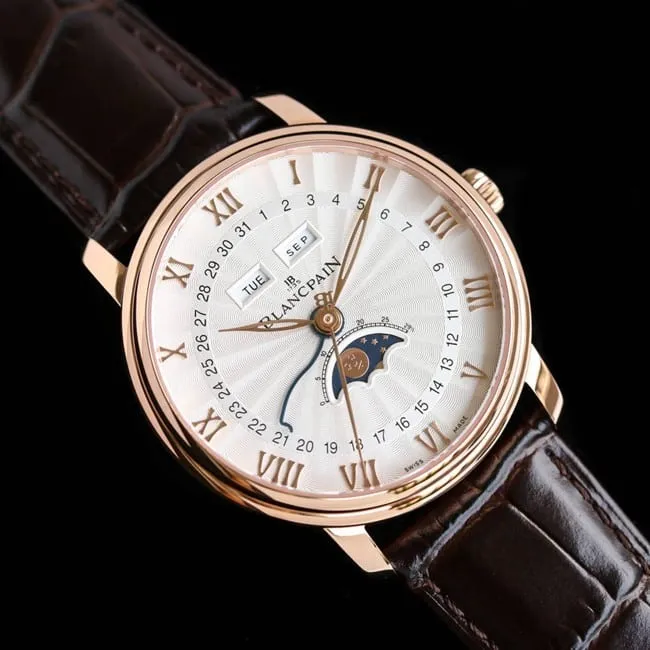
The craftsmanship of a luxury watch extends to every visible detail. Look at the polishing on the case and bracelet—genuine watches have a mirror-like finish, while fakes often have uneven brushing. The font on the dial should be bold and confident, not thin or hesitant. When it comes to complications like moon phases or tourbillons, remember that many collectible watches keep things simple; overly complicated features on an affordable piece are often a giveaway. Inspect the hands: their length, thickness, shape, and material can all differ between genuine and fake. For instance, heat-blued steel hands on a real watch display a deep, rich blue, whereas imitations often just paint a superficial color. The dial itself can be a work of art—look for enamel, guilloché patterns, or metallic finishes that only skilled artisans can produce.
Trust Your Instincts, Verify with Knowledge
Understanding these nuances empowers you to make smart purchases. Whether you're comparing a transparent case back, checking movement engravings, or listening to the winding mechanism, you're now equipped to spot the difference. Remember, a genuine high-grade watch is a blend of artistry and precision—anything less is simply a compromise.
More Questions About Spotting High-Grade Watch Movement Craftsmanship
How much does a genuine watch movement cost to produce? -
Is it worth buying a replica watch with a transparent case back? -
What are the best ways to verify a watch movement's authenticity online? -
Can a fake watch movement be detected by its sound alone? -
Where can I find a reliable guide to watch movement markings? -
What are the differences between ETA and Swiss movements in replicas? -
How do I know if my watch's movement is actually a Sellita clone? -
Are there any smartphone apps that can help identify a fake movement? -
Why do some luxury watch movements have blued screws and others don't? -
What is the resale value of a watch with a genuine movement? -
How does a unidirectional winding rotor feel compared to a bidirectional one? -
Can I tell a fake movement by the number of jewels it has? -
What should I look for in the movement engraving to spot a fake? -
How often should a high-grade automatic watch movement be serviced? -
Is it safe to buy a luxury watch from an online marketplace? -
What are the telltale signs of a poorly finished movement? -
How does the movement affect the watch's overall weight? -
Are there any specific movement models that are commonly faked? -
What does a genuine movement sound like when you wind it manually? -
How can I compare a fake movement side by side with a real one? -